OpenClaw is open-source
OpenClaw is released under the MIT license. The full framework — workflow engine, approval system, integration layer, monitoring — is available on GitHub. Any developer can clone it, configure it, and run it on their own infrastructure.
OpenClaw is not a freemium model with locked features. The self-hosted version is the same framework ClawBuilt uses in production. There is no proprietary layer that only the managed service has access to.
What self-hosting OpenClaw requires
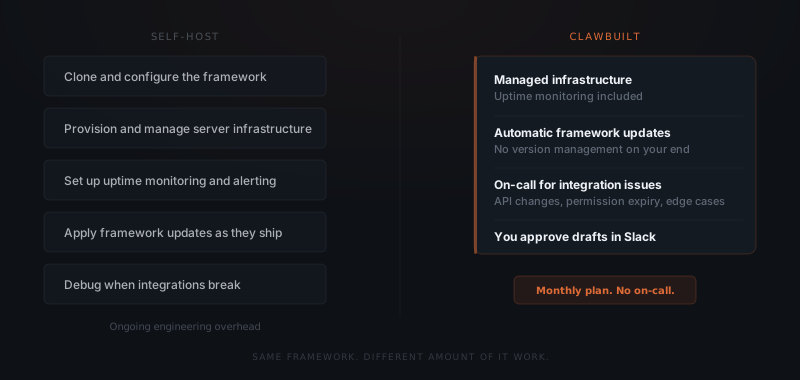
Running OpenClaw in production means owning several things most founders do not initially account for:
- Infrastructure — a server or cloud environment that runs the agent continuously, including failover
- Monitoring — alerting when the agent fails, misses a trigger, or behaves unexpectedly
- Updates — keeping the framework current as new versions ship
- Debugging — diagnosing and fixing issues when a workflow breaks or an integration changes its API
Self-hosting OpenClaw is fully supported — but it is not a cost saving unless your business already employs an engineer who can own that operational work. It trades a monthly service fee for engineering time.
For a developer-run company this is normal. For a founder-led SMB without a dedicated engineering function, infrastructure reliability is a new job — not a removed expense.
What ClawBuilt handles instead of self-hosting
You can run it yourself. The question is whether your time is better spent doing that.
ClawBuilt runs OpenClaw on managed infrastructure with uptime monitoring, automatic framework updates, and on-call support for integration issues. When a workflow breaks — because an API changes, a permission expires, or a new edge case appears — ClawBuilt diagnoses and fixes it. The founder sees a Slack notification and approves the correction.
The monthly plan covers all of that operational work. For most founder-led businesses, the alternative — engineering time spent on infrastructure instead of sales, delivery, or product — costs more than the plan.
When self-hosting OpenClaw makes sense
Self-hosting is the right choice in specific situations:
| Situation | Why it fits |
|---|---|
| In-house engineering team | You already have capacity to own the infrastructure |
| Building on top of OpenClaw | You need to customise the framework, not just use it |
| Compliance requirements | Your data cannot leave your own infrastructure |
| High volume or specialised workflows | You need control over performance and resource allocation |
For these cases, the GitHub repo is the starting point. The documentation covers installation, configuration, and integration setup. ClawBuilt can also advise on self-hosted implementations through a separate engagement.